Rowena and I agree on very little when it comes to taste. Books, television, food — we are miles apart on most of it. But antiques? That is one territory where we are almost perfectly aligned. Same instincts, same eye, almost always the same call.
This post is not really about antiques, though. It is about something I have been thinking about for a while — how structure shapes behaviour, and how consistently we underestimate it.
A little context first.
It has been over seven years since we moved to Kandy. It was a decision Roons and I had wanted to make ever since we got married and decided to have children. Both of us grew up in villages, and those years left a deep impression — the unhurried pace, the space to breathe, the sense of being rooted somewhere. City life had its necessities, and Colombo kept us for longer than we planned. But we built our home slowly, and when Shaakya finished her O-Levels, we took the leap. Lock, stock, and dogs included.
We love the house. But there was always one thing we knew we had not quite got right — the verandah off our bedrooms.
It looks out onto a beautiful little forest. Giant squirrels, all manner of birds, monkeys, and on the lucky evenings, flying squirrels gliding between the trees. At night, during the right season, fireflies turn the whole thing into something quietly magical. We had two beautiful day beds out there. Comfortable, well-chosen, lovely to look at.
And we never sat there.
Not for a cup of tea. Not with a book. Not once, really. The day beds were slightly too small to stretch out on properly, and not quite right for sitting up either. They existed in that awkward in-between — neither one thing nor the other — and so, without ever consciously deciding it, we simply stopped going out there.
Then we built a small guest house on the property. The day beds turned out to be perfect for it, and we moved them across. The verandah sat empty. Roons had had her eye on a pair of easy chairs for some time — I had been lukewarm on the idea, partly out of loyalty to the day beds, and partly because I was not sure chairs would work in the space. But with nothing else there, we gave it a go.
We put the chairs in place.
And that, as they say, was that.
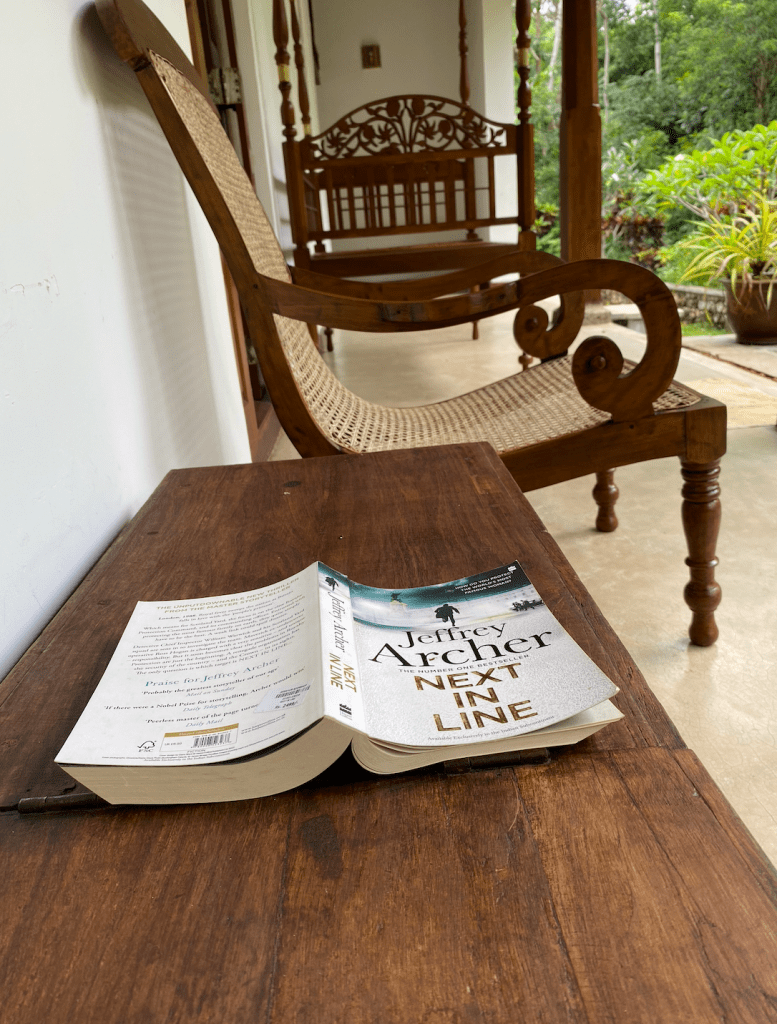
We now sit on that verandah every day. Tea in the morning, quiet time in the evening, the children out there, the dogs sprawled around us. We watch the forest come alive in the afternoon light and go still after dark, punctuated by fireflies. The space has become one of the favourite parts of our home — and nothing changed except two pieces of furniture.
The forest was always there. The view was always there. We were always there. What was missing was a structure that invited the behaviour we actually wanted.
I think about this a great deal in the context of organisations.
We invest heavily in trying to change how people behave at work. Training programmes, awareness campaigns, 360-degree feedback, culture initiatives, values workshops. All of it well-intentioned, much of it genuinely thoughtful. And yet, so often, it does not stick — and we cannot quite understand why.
What we rarely do is look at the structures we have built, and ask honestly whether they are designed for the behaviours we say we want.
Organisations that want openness but have approval chains that slow every decision to a crawl. Workplaces that speak of trust but have policies that treat employees as risks to be managed. Leadership teams that call for innovation in spaces — physical and psychological — that were designed for compliance. The structures send one signal. The training programmes send another. And people, being sensible, follow the structures.
Behaviour does not exist in a vacuum. It is always a response to an environment. When the environment makes a behaviour easy and natural, people tend toward it. When it makes a behaviour difficult or awkward, they tend away from it — not because they are resistant, but because friction is friction.
Before the next programme, the next initiative, the next flavour of the month — it is worth pausing and asking a more fundamental question: are our structures actually built for the behaviours we want to see?
Fix the chairs. The rest has a way of following.


Leave a comment