On the tools we withhold, the tools we insist on, and the absurdity of both.
We were talking about rivers and pools the other day — how swimming in one does not prepare you for the other in the ways you think it does. How the body learns the wrong thing first, and then holds onto it with remarkable stubbornness.
But there is a sequel to that story. And it involves a small, simple, almost trivial piece of equipment.
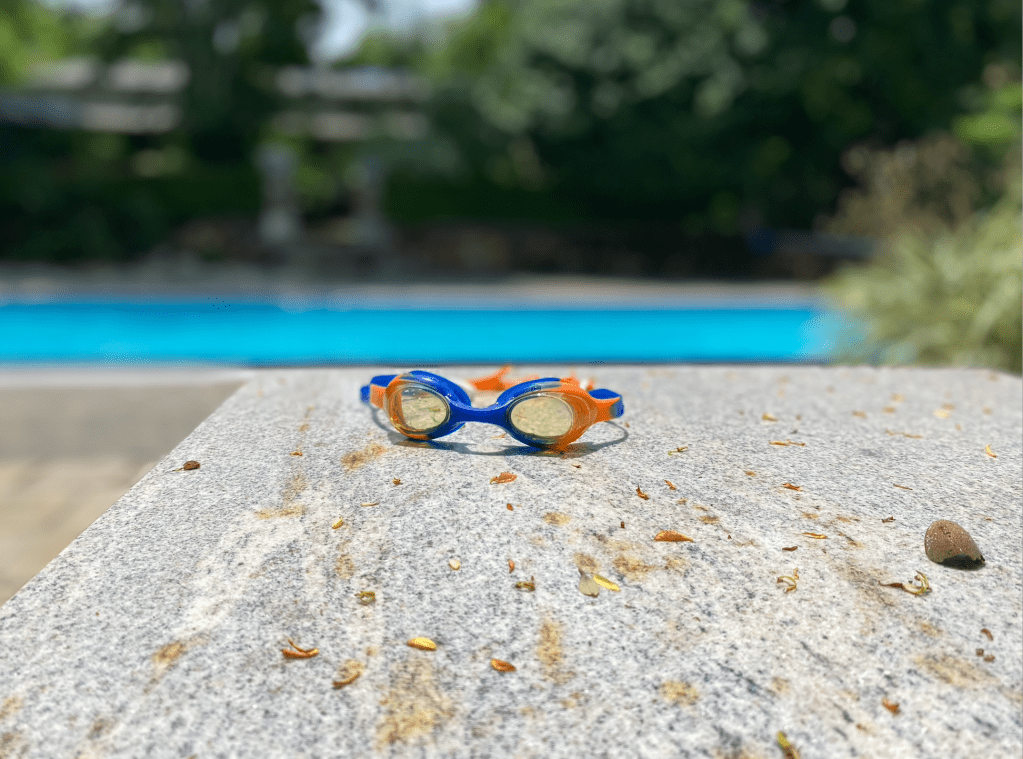
Goggles.
In the river, you don’t need them. Nobody swims the Kelani with goggles on. The water moves, the light shifts, you navigate with your head above the surface. Goggles would be absurd — an overengineered solution to a problem that doesn’t exist there.
In the pool, they are not optional. The chlorine sees to that. Without goggles, your eyes sting, your vision blurs, your focus fractures. You are still technically swimming — but you are swimming impaired. Every lap costs you more than it should. Your performance quietly deteriorates, and you may not even know why, because the discomfort becomes the new normal.
A small thing, withheld at the wrong moment, is not a small thing at all.
I have seen both failures — in pools, and in organisations.
The first failure: someone moves into a new environment — a new role, a new team, a new system, a new culture — and nobody gives them the goggles. They are expected to perform at pool-level from day one, armed with nothing but river instincts and goodwill.
It isn’t cruelty, usually. It’s assumption. The manager swam the pool for so long they forgot goggles were ever a choice. The organisation moved people into new environments and called it “onboarding” while handing them a locker key and a map of the cafeteria. The new person squints through the chlorine, concludes they are not good enough, and either leaves or quietly learns to live with stinging eyes.
The cost is real. Performance dips. Confidence erodes. What looked like a talent problem was actually a tools problem all along.
The second failure is less obvious — and in some ways more interesting.
This is the person who has been given goggles. Who has worn goggles so long, so well, in so many pools, that they now cannot imagine swimming without them. And then — they go to the river.
And they put the goggles on.
It happens all the time. The consultant who arrives with a sophisticated framework — built for complex, multi-layered corporate environments — and applies it to a ten-person family business that runs on instinct and relationships. The HR system designed for a thousand employees, deployed in a team of twenty. The six-month structured change programme, launched in an organisation that needed a two-week conversation.
The goggles don’t help in the river. They fog up. They sit wrong on the face. They solve for chlorine that isn’t there. And yet the person wearing them cannot understand why everything is blurry — because the goggles always worked before.
The real skill — the one that takes years to develop and humility to maintain — is knowing which environment you are in, and equipping accordingly.
Not just whether your people can swim. But whether they can see.
Not just whether you have the right tools. But whether those tools belong in this water.
TWO THINGS TO CARRY
When you move someone into a new environment, ask what they can no longer see clearly — and give them what they need to see it. Don’t assume that because you stopped noticing the chlorine, it isn’t there.
And when you carry tools that have always worked — stop before the river and ask honestly: is this a pool problem? Because goggles in a river aren’t expertise. They’re just goggles in a river.
Everything teaches. But only if you notice what’s blurring your vision.


Leave a comment