Twenty-one years ago, the most important question I ever asked wasn’t a grand one…
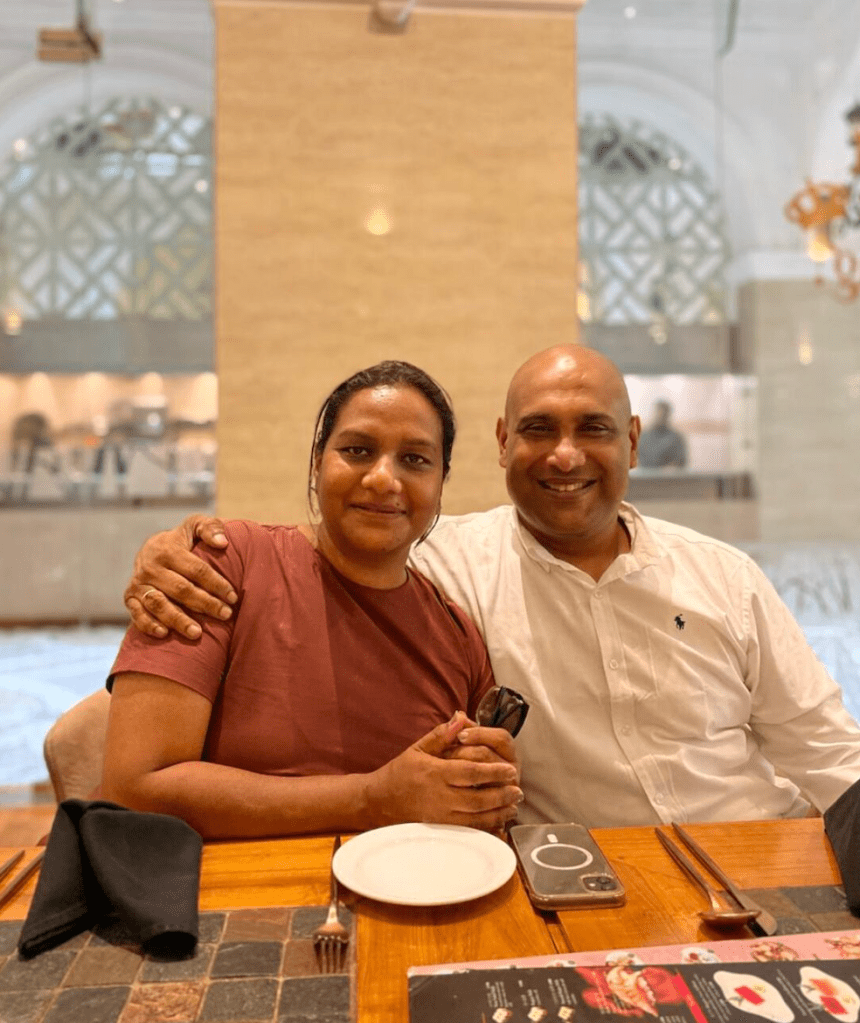
Twenty-one years ago, on the second of June, I sat down beside my wife and asked her a question that would quietly redraw the rest of both our lives.
“Are you sure I should quit?”
That was it. No speech. No flip chart. Just five words, asked in a small voice…
We were at Nivasipura — our first ‘home’, the one against which every home since has been silently measured. Shaakya was two. She was curled up next to me watching The Wild Thornberries, the kind of cartoon you half-watch as an adult while your mind wanders elsewhere. And mine had wandered a long way that morning: to the question I was about to put to Roons.
On paper, there was no question to ask.
I was, by most measures, at the top. My superiors had begun to murmur about a global role. I genuinely loved the work, and I loved the team I was with even more — the rarest kind of luck, to enjoy both the job and the people you do it with. By every sensible metric, the answer to “Should I quit?” was a firm, obvious no.
But something gnawed at me, and it would not let go.
I was never home. The work I loved was, in practice, the very thing keeping me from the one place I most wanted to be. Roons had made her own decision long before — firm, unwavering — that she would be at home and be a full-time mother. I respected that completely. But it meant the financial weight sat squarely on me. We had almost nothing saved. Both of us came from honest, middle-class parents who loved us deeply but simply could not “support” us in the financial sense. There was no safety net to fall into. If I jumped and missed, we would feel the floor.
So I asked her. And I meant the question. If she had hesitated — if she had erred, even slightly, on the side of caution — I am quite certain I would not be where I am today. I would have nodded, told myself it was the responsible thing, and stayed.
She did not hesitate.
She not only told me to take the leap — she sat down with me and conceptualised it. What we’d do. How we’d do it. Where we’d start. She turned a terrifying, abstract “what if” into something with edges I could actually hold. And then she gave me the one thing I needed most and could not manufacture for myself: the nudge. The permission to make a hard, frightening, irreversible choice.
So it began. First High Five Consultancy and Training, and in time, Luminary Learning Solutions.
Years later, Roons wrote a chapter for the parenting book we did together. It was about a small afternoon in Deraniyagala. Jaith, nine or ten, forever in that stream trying to catch snakeheads with his bare hands, came running back soaking and triumphant with a little fish in a jam jar to show her. “Ammi, look,” he said, tugging at her sleeve.
She was in the middle of something — she doesn’t even remember what; probably something that felt urgent and turned out to be nothing. “Yes, very nice, Jaith,” she said, and went back to it.
He stood there a moment. And then, quietly — not angry, just sad — he said:
“You didn’t really look.”
I read that chapter and felt it in my chest, because that line is exactly what I was afraid of in 2005. Not failure. Not money, even. I was afraid of becoming the father who is there but never quite present — the one who says “very nice” without looking up, while a two-year-old watches The Wild Thornberries beside a man whose mind is in a boardroom on another continent.
We wrote a whole book on the idea that you are raising future adults, not just managing children. But the truth underneath all of it is simpler and harder: being in the room and actually seeing the person in it are not the same thing. You can be right next to someone and miss them entirely.
I quit so that I would look. So that when Shaakya — and later Jaith — tugged at my sleeve, I’d be the kind of father who put the thing down.
Roons is not on LinkedIn, where I put a small appreciation of this event as a post. She is not “involved” in the business in any operational sense — she’ll be the first to tell you that. But anyone who imagines that means she wasn’t central to it has the picture entirely upside down. She has always been the anchor that holds the whole thing steady, the quiet infrastructure that made every visible thing possible. If I was the brains behind it, she was — without question — the heart. And the soul.
We always said, in the book (coming up in print soon), that we are NOT role models. We’ve fought, mercilessly; we’ve got plenty wrong. But the one thing we never wavered on was that this — the family, the leap, each other — came first. Parenting, like that decision in 2005, is a choice. And once you’ve made it, you may as well commit to it fully and actually enjoy it.
As we close in on our 21st anniversary of starting out on our own, I wanted to mark this particular day — not the launches, not the company, not the milestones everyone else can see. Just the small, frightened question I asked, seated on the ground in front of the TV at Nivasipura, and the woman who answered it without blinking.
Everything I’ve built since rests on her reply. I won’t repeat it here. Some answers are ours to keep.
Thank you, Roons. For looking. And for telling me to leap.
Everything teaches. Not everyone has someone who tells them to jump.


Leave a comment