Some mornings you walk into a room expecting to teach, and the room teaches you instead.
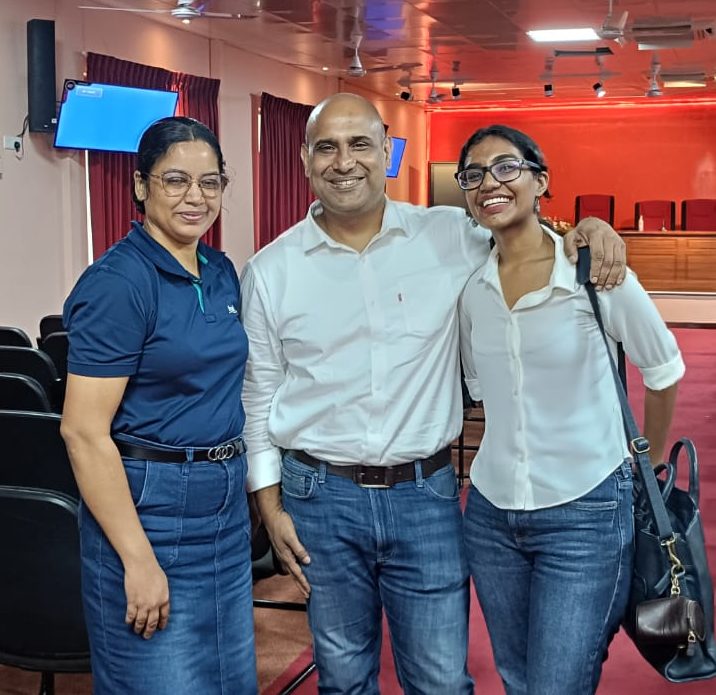
Yesterday, Shaakya and I ran a programme for the FTZMA in Katunayake. Standard enough — until one of the participants walked up to me with a half-familiar look, and it took me an embarrassing few seconds to place her. Kithmini. One of the very first people I ever recruited, back in my Courtaulds Clothing days. Nearly two decades ago.
She’d joined us straight out of her A/Ls, from a small school in Katuwellegama. I’d love to tell you I spotted something rare and rescued it. The truth is far less flattering to me: she simply was rare, and all any of us had to do was not get in her way. Diligent, switched on, conscientious to a fault. She started as a sewing operative. She did not stay one for long.
Supervisor, then executive, then senior executive, in the kind of succession that makes you check the calendar twice. She came into the HRD team under Bimsara Jayasinghe and quietly became the reason our training school worked at all — recruiting, training and inducting operatives who walked onto the production floor already good at the job. I held the title of someone who promoted her. She did the work that made the promotions impossible to withhold.
Two decades on — after a five-year stint as an HR Manager at a smaller organisation — she’s back doing the thing she loves most. Training, at Ansell Textiles Lanka. The girl from the small school now stands at the front of the room, growing others the way she was once grown.
Here’s what struck me, standing there.
We talk a great deal about legacy in my line of work, usually with more solemnity than it deserves. But legacy isn’t a building with your name on it or a framed photograph in a corridor. It’s far quieter than that. It’s someone you crossed paths with early, who took a small start and made an entire life out of it — most of it nowhere near you, most of the credit honestly hers.
The temptation is to feel proud of what you did. The more accurate feeling is gratitude for having had a front-row seat. I held a door open, perhaps. She walked through twenty years of it on her own legs.
And there was a lovely symmetry to the morning. For years I’ve told Shaakya stories about the early days — the people, the names, the small schools they came from. Yesterday she got to put a face to one of them. Two of the people I’ve had some hand in growing — one my daughter, co-facilitating beside me, and one my first recruit, walking back in after twenty years — in the same room, on the same morning. I’m not sure I’d earned a moment that neat. I took it anyway.
That’s what gives me hope, if I’m honest. Not the grand interventions. The small starts that quietly turn into long journeys, while you’re busy looking elsewhere.
Everything teaches. Some lessons just take twenty years to walk back through the door and smile at you.


Leave a comment