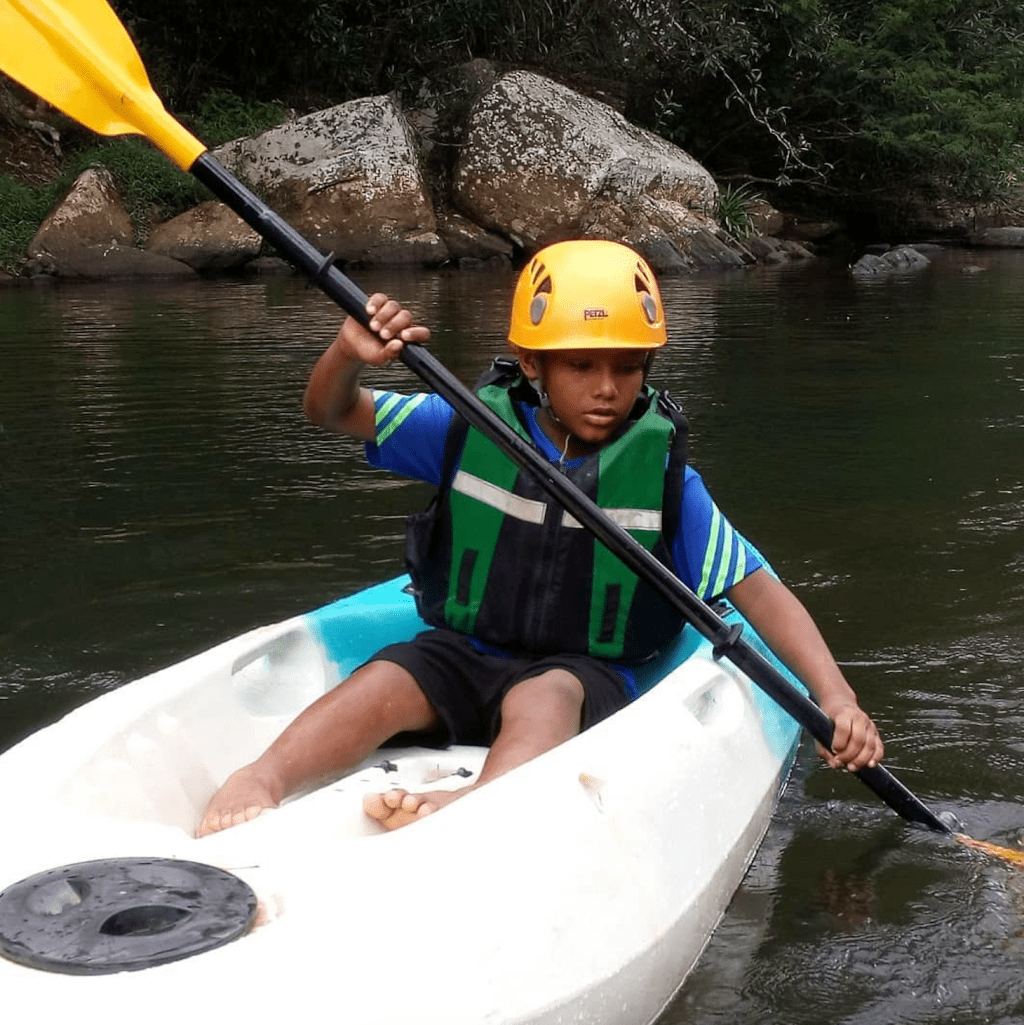
There is a photograph I love of my son, barely out of toddlerhood, sitting in a kayak on white water, paddle in hand, helmet strapped on, concentrating harder than I have ever seen a child concentrate on a spelling test. He was terrified the first time. He went anyway.
That was deliberate. My wife and I took both our children white water rafting, rock climbing, abseiling and camping while they were still small enough that most parents would have kept them safely indoors with a workbook. Later, I took my son to summit Kilimanjaro with me, and to walk to Everest Base Camp. None of it was about producing athletes or adrenaline junkies. It was about something I believe far too many of us have quietly outsourced to schools: raising children who can actually cope with the world.
Confidence Is Not Taught, It Is Earned
You cannot lecture a child into confidence. You cannot hand a ten year old a worksheet on resilience and expect it to take. Confidence is built the way calluses are built, through repeated, uncomfortable contact with something hard. The first time my son was genuinely afraid on that river, and made it through anyway, he learned something about himself that no classroom could have given him. He learned that fear and capability can occupy the same body at the same time, and that fear does not get the final vote.
This is at the heart of what my wife and I wrote about in Raising Future Adults. We did not set out to raise children who were comfortable. We set out to raise adults, and adults are made in moments of manageable hardship, not in moments of comfort.
The Mountain Does Not Grade on a Curve
Kilimanjaro does not care how well you did in your exams. Neither does altitude sickness, a blistered heel on day four of a trek, or a kayak that tips you into cold water. These experiences strip away every artificial marker of achievement we hand children in a classroom and replace it with something far more honest: did you keep going, did you help the person next to you, did you learn to sit with discomfort instead of demanding it end.
My son and I have summited together, walked together to Base Camp together, and neither of us came back with a certificate. What we came back with was something a classroom simply cannot manufacture, a shared understanding of what the two of us are actually capable of when things get hard.
What This Means for How We Raise and Lead
I bring this up not just as a father, but as someone who spends most of his working life around leadership development. We have built an entire industry around classrooms, workshops and slide decks, and there is a place for all of it. But if you ask most leaders where they actually learned resilience, where they learned to hold their nerve under pressure, where they learned that they could suffer and still function, very few of them will point to a training room. They will point to a hard season, an unexpected failure, a physically demanding experience that forced something out of them they did not know was there.
If that is true for us as adults, it is doubly true for the children in our care. The classroom teaches content. Varied, difficult, occasionally frightening experiences teach character. Both matter. Only one of them is optional if the goal is producing a capable adult rather than simply an informed one.
The Takeaway
Put your children, and yourself, in front of things that are hard, physical and slightly frightening, on purpose, and often. A kayak on white water will teach a child more about capability in twenty minutes than a semester of being told they are capable ever will.
The classroom was never meant to be the whole education. It was only ever meant to be the smallest part of it.
Everything teaches. Most of it doesn’t happen in a classroom.
 V Over Tea
Leave a comment