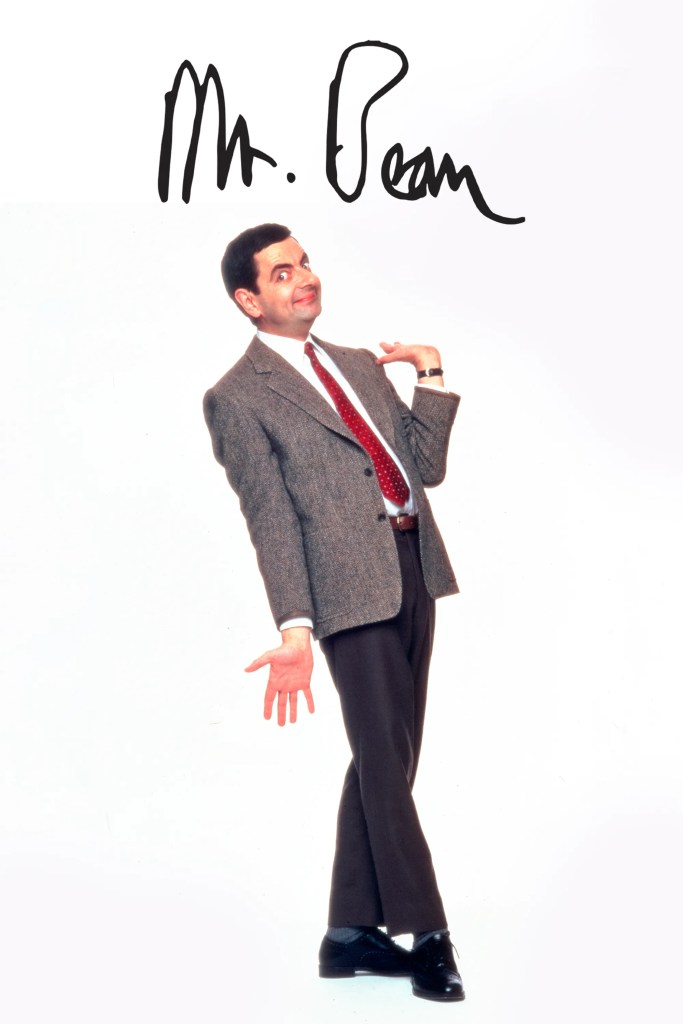
Early morning. Walk done. Kettle on. And somewhere between the last sip and the first thought of the day, Google (or fate, or whatever it is that decides these things) dropped a story in front of me. Rowan Atkinson.
I thought I knew this one. Funny man, rubber face, made Mr. Bean, became a legend, the end. Turns out I knew almost none of it.
Atkinson grew up with a stutter, badly enough that he was bullied for it in school. One of his schoolmates at the time was a boy two years his junior called Tony Blair, who would go on to become Britain’s Prime Minister. Blair remembers Atkinson as the quiet, shy one. Nobody at that school was writing “future comic genius” next to his name.
His first attempts on television did not land the way legend suggests. Mr. Bean is not the story of an overnight hit. It came after years of sketch work, false starts, and a character that existed in his head for a decade before it even had a name. And here is the part that stopped me mid sip: the stutter never fully left him. What did happen was that when Atkinson stepped into character, someone other than himself, the stammer disappeared. Getting into character was not a performance trick. It was survival. It was how a man who struggled to find his own voice found a way to speak at all.
Sit with that for a second. The man who has made entire generations laugh until they cried, built a career on it, has spoken openly about the anxiety underneath the character, about how the responsibility of playing Mr. Bean weighs on him, how he finds it exhausting, how he genuinely looks forward to being done with it. And true to that, he chose to stop. At the height of Mr. Bean’s popularity, when the world wanted more, he made only a handful of episodes and walked away from the version of the show that could have run forever and made him considerably richer. Not because he had run out of ideas. Because he knew what staying too long in something, even something wildly successful, can cost.
That is the bit that got me. Because we tend to build our stories of success backwards. We look at the person standing in the light and assume the light was always there. We rarely ask what it cost to walk into it, and we almost never notice the moment someone had the courage to walk back out of it, deliberately, before it consumed them.
I write about this often, because I see it constantly in the people I train and coach. We are so quick to explain away someone else’s success as luck, as talent they were simply born with, as being in the right place at the right time. It lets us off the hook. If Atkinson was just lucky, then his story asks nothing of me. But if Atkinson was a bullied, stuttering boy who built himself, piece by piece, through years of unglamorous sketch work, and then had the self awareness to step back from stardom because he valued his peace over his profile, then his story asks a great deal of me. It asks whether I am willing to do the slow, unseen work. And it asks whether I would have the courage to walk away from something successful, purely because it was no longer good for me.
In one of my books I wrote about how the loudest, most confident voices in a room are often mistaken for the strongest ones, and how we consistently underestimate the quiet work of people who are simply trying to hold themselves together while performing at their best. Atkinson’s story is that idea in its purest form. The most charismatic silent comedian of his generation was, underneath it all, a man managing anxiety and a stammer, one character at a time.
So here is what I carried into my session this morning, and what I am leaving with you now. The next time you catch yourself thinking that someone else’s success came easily, that they were simply born gifted or lucky, remember the boy at Durham who could barely get his words out and was mocked for it. Remember that his most famous silence was not empty, it was full of years of effort. And remember that real strength sometimes looks like walking away from the very thing that made you, because you know, deep down, what it is actually worth.
Never let anything, including your own doubt, stop you from starting small and building yourself, one honest step at a time.
Everything teaches. Even a stutter, if you let it become your voice
 V Over Tea
Leave a comment